The story of Jonah is a great challenge. It shows me, one way or another, the Lord will get us where He wants us to be, despite our avoidance tactics. Jonah was God’s prophet. This man’s words and actions show us that being a prophet doesn’t always make you a holy man. However there is nothing like being taxied about by a whale to tweek anyone’s attitude. Almighty God says to Jonah in chapter 1 verse 2: “Go to the great city of Nineveh and preach against it, because its wickedness has come up before Me.”
We need to note that God isn’t ignoring sin, He wants to provide a way out for the people who live there. That’s Who He is – He is mercy and compassion in action. He’s God so He can save whoever He likes. That kind of puts a full stop on the idea that we can boss Him around. But I think the Lord wants to teach Jonah about himself and his unforgiving attitudes as well. Our God is like that, He can do gazillions of things at once, and still remain true to His primary purpose. His purpose was to save the wicked people of Nineveh. Challenging Jonah’s ideas was a by-product. Sometimes our ideas need challenging!
So God says “go” and Jonah ‘goes’ alrighty. He goes in the wrong direction … running. His plan is to flee from the Lord and His plan for Jonah’s life. I think we need to pay careful attention to the men and women in the Old Testament, they were people who often saw His deliverance, and many were challenged by the way He did what He did. They made excuses, and tried to wiggle out of His plan, but they often found they landed right back where they had started – somewhat the wiser for messing about with God Himself. He will do what He will do – and it will be good!
Jonah’s heart was hard. He doesn’t think the Ninevites are worth saving, and he thinks that the Lord should agree with him. Meanwhile now he’s in the bottom of his avoidance plan, sleeping, while the particular ship he’s escaping on, is breaking up and about to go down. Then the crew come to him desperately asking for help. Chapter 1:10,“… and they asked, “What have you done?” (They knew he was running away from the Lord, because he had already told them so.)” Jonah knows he is out of order so he says ‘throw me in the sea and it will become calm.”
The sailors try to manoeuvre their way out of their predicament because they don’t want to be held responsible for the prophet’s death. So they cry out to God, personally, and then … they chuck him overboard. These men go from understanding that Jonah knew God, to taking responsibility for their own actions. Sometimes what happens to us might be our own fault – but it also becomes a lesson for other people around us. Now Jonah is in God’s Uber. He is inside a whale, alive, for three days and nights. He remains uninjured, he is simply incarcerated inside the whale. He prays, a fervent prayer of deliverance and hope.
Then the fish conveniently throws him up onto dry land and God repeats His instruction to Jonah. “Go to the great city of Nineveh and proclaim to it the message I give you.” Jonah 3:2. This time the man obeys and the Ninevites respond with fasting — even their King pays attention to what Jonah says.
In Chapter 4:1-3 it says: “But to Jonah this seemed very wrong, and he became angry. He prayed to the Lord, “Isn’t this what I said, Lord, when I was still at home? That is what I tried to forestall by fleeing to Tarshish. I knew that You are a gracious and compassionate God, slow to anger and abounding in love, a God who relents from sending calamity. Now, Lord, take away my life, for it is better for me to die than to live.” But the Lord replied, “Is it right for you to be angry?”
This conversation is fascinating. Jonah is using God’s own forgiving nature and loving goodness as an excuse to avoid his task and disobey the Lord … simply because he doesn’t like Ninevites! Jonah’s hatred of these people is of great importance to him, because he keeps telling Almighty God that he would rather be dead than help them, but pouting doesn’t work either. God reminds him who is God, and who isn’t. It ain’t him.
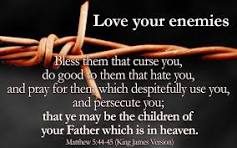
The Lord uses an ordinary vine to explain His Ways to Jonah. The man is happy for himself to be saved, but not a bit happy to see his enemies saved. Food for thought – we can check out our forgiveness metre by seeing how we react whenever our enemies are blessed. If our hope is to see them beaten up, killed, or utterly disgraced – simply because they have hurt us – boy have we missed the mark. That’s called revenge. Jonah fancied death and destruction so he got angry with God for letting his enemies off for free. It seems he thinks God should share his opinion and judgement.
Christians don’t have room for hate. We cannot hate and be vessels filled with His love at the same time. I think that’s why some of us choose to hide from God and each other — because He just might challenge us, the way He challenged Jonah. We can rationalise and make excuses for the way we behave, but in the end our excuses render us incompatible with the Spirit of the Living God. Then we stop spreading the love of God everywhere. Let’s not live our lives like Jonah did – made a prisoner by our own opinions of other people, and the way they have treated us. Let’s lock into our Lord’s thoughts and His Ways of love instead. Bye. 👋.