
P 3320 Faith has substance.

“My response is to get down on my knees before the Father, this magnificent Father who parcels out all heaven and earth. I ask Him to strengthen you by His Spirit—not a brute strength but a glorious inner strength—that Christ will live in you as you open the door and invite Him in. And I ask Him that with both feet planted firmly on love, you’ll be able to take in with all followers of Jesus the extravagant dimensions of Christ’s love. Reach out and experience the breadth! Test its length! Plumb the depths! Rise to the heights! Live full lives, full in the fullness of God.” Ephesians 3:14.

There’s Paul praying for us all again! He shows us that we don’t have to see something to respond to it. God’s love has substance- the substance is in the bible. When we talk about substance, we are talking about things that can be seen when we use our faith. Just because something is intangible, that doesn’t mean it isn’t substantial. The substance reveals itself with action. God’s love isn’t just an expression in a book — He chose to come here, and be just like us. Jesus cried, was fed, burped, lulled off to sleep as an infant. When He cried there were real tears!

The reality is, any part of humanity can see and experience His love, because we, as His kids, choose transformation over information. We act on the premise that: “Faith is the substance of things hoped for, the evidence of things not yet seen.” Hebrews 11:1. The way we live gives faith substance to other people. We are His love on display, as we act, speak, and interact with others. At the same time believing what God said and actively responding to it, takes our hope in Him, and turns it into something substantial. Love has put us on a road in Australia, distributing blankets, bibles, prophetic, insightful words from the Lord for the people-who-don’t-know-Him-yet. God’s love has evidence. Our faith-in-action is the outward exhibition of it showing the world what He is like.

He says it, then we choose to believe it and so we go and act on it. If I am reading the bible and it says that I have a problem with my brother or sister in Christ — I don’t use my rational mind to discount what He said — even if I can’t think of anyone I’m mad at! Instead I ask the Lord, in prayer. Lord would You please show me who I need to forgive, or who needs me to ask them for forgiveness.” My rational mind might excuse me, but the bible clearly says: “I am inexcusable.” (Romans 2:1.) Dead people don’t decide if something is wrong or right – instead we choose to ask the King!

Otherwise I can be guilty, but unaware of my guilt, simply because I can’t see myself clearly. To see myself clearly I have to look in God’s mirror, the bible. (James 1:22-25.) Personally, I try avoid ordinary mirrors like the plague, because when I look in them I think: ‘Who the heck is that chubby old elderly lady?’ I have had to learn that my perception of who I am doesn’t match up with reality! This can happen to anyone of us spiritually, we can get so busy, looking and sounding right, that we have no time or energy left to participate in living right. So when we ask for forgiveness, our faith in God’s all encompassing forgiving love is it’s own substance – we go and apologise and make reparation..

The Lord’s answer to man’s dilemma has always been astonishing and comprehensive. God’s faith had substance —Jesus (God Himself) came here, as a MAN and allowed mankind to punish Him. He literally took our place in the dock and became ‘the accused’ for us. “Surely He has borne our griefs (sicknesses, weaknesses, and distresses) and carried our sorrows and pains [of punishment], yet we [ignorantly] considered Him stricken, smitten, and afflicted by God [as if with leprosy].” Isaiah 53:4.

Some people look at Jesus Christ and say — ‘well, He must have done something wrong, and that’s why they killed Him.’  But He was blameless. Perfect in His attitudes, heart, and mind. It seems to me that our idea of ‘right’ leaves a lot to be desired. It can be affected by our friends, families, moods and trends. We need a steadfast guide, and Father God has provided SomeOne for us, He sent us the Holy Spirit together with the bible. James 4:17 gives us this bit of clarification:If anyone, then, knows the good they ought to do, and doesn’t do it, it is sin for them.” James knows that words lack substance without actions to back them up.

By doing what He did, the Lord Jesus chose to become a door, a way for any one of us to reconcile with Father God. Somebody had to die for mankind’s sin and Jesus did. If He hadn’t chosen to do it, hell would be full with every single human being who had ever lived. Our own self-cultivated attitudes, actions and appetites make it easy for the enemy to lead us astray. Which is why we cannot afford to look down on some awful schmuck who does some dastardly thing. None of us know what we are capable of until we are desperate and cornered.

Sinful appetites and attitudes will continue to grow, while we choose to rationalise them. Our faith needs prayerful, intentional Holy Spirit-help and inspired self-denial. Let’s choose to give our faith substance by acting on what we say we believe. Bye 👋.

P 2714 “Blessed are they who mourn …”

In the Western world we have weird ideas about mourning and loss. We treat it like it is a terrible flu or something and other people stand by patiently waiting for you to get over it. If only. As if someone else knows how much grief is enough for you! The loss of someone close is not just a small thing – it can be devastating. I love the fact that in the Eastern parts of this world grief is allowed to be expressed, and passion for another person is not pushed away when they leave this world. Instead grief is expressed – loudly. I think that is quite healthy. Jesus told us that mourning is a blessing, so perhaps we need to revise our way of thinking. Grief is something we must go through, not avoid.

Grief comes in many different forms and has many different causes, like losing a career you love. Maybe you have been forced into a severely financially straightened life-stye. Perhaps you have been injured or ill, and you’ve lost your old way of life and you have to reinvent yourself. Or a much loved child has wandered so far away from everything good, right and worthwhile – you cannot even allow yourself to think about it… so your prayers turn into groaning. The bible says this for people who are so grief-stricken they can’t pray: “In the same way, the Spirit helps us in our weakness. We do not know what we ought to pray for, but the Spirit Himself intercedes for us through wordless groans.” Romans 8:26.

Thank God He is praying for us when we cannot!

There are also times that we can be suddenly dragged under into grief by things that have happened to people we love. Truly loving people means we share their sorrow. At the same time, other people’s actions and attitudes can also cause much grief. Or we can be greatly misunderstood personally, and not able to explain ourselves, and that causes the terrible pain of grief as well. Bin there, dun that! I think of grief as some sort of emotional drowning, and the surface of the water – where the fresh air is – seems too far away to reach and unachievable. Maybe we will never reach the surface again – that thought causes even more grief! Whatever the cause, grief, sorrow and suffering are all a reality, and we can get stuck there.

I have observed that grief weakens even the strongest people. I’ve known people who could not find their way out of a grief cycle. It was as if their grief was a terrible burden that horrible circumstances had tied to their backs. So they clung like mad to what they had lost, because their grief was all they had left! I’ve also known other people who carried their grief as proof of their love for someone else who has long since gone to their reward. Grief then becomes an unnatural tie that cannot easily be dealt with or resolved. How long is long enough to grieve?  I have no idea. I can only say that we need to pass through this process, one step at a time. If we hurry grief, we run the risk of postponing it – only to have it grab us by the throat unexpectedly.

What does God say about it? Actually grief made an appearance in the garden of Eden! We barely get to Chapter 6 of Genesis when this verse appears:“And the LORD regretted that He had made man on the earth, and it grieved Him to His heart. It is too easy to pass off the Lord’s grief over mankind’s sin as something that He can absorb, because, after all – He’s God! But this verse teaches us something about Him, and us. The bible tells us that we are made in His image and we have shared characteristics with our Heavenly Father. That one line in Genesis shows us that under some circumstances, grief is normal – He feels it … we feel it. You can experience it after you have been betrayed. 

In Isaiah 53:4 it tells us that we can have grief because of our sin. “Yet it was our weaknesses He carried; it was our sorrows that weighed Him down. And we thought His troubles were a punishment from God, a punishment for His own sins!” Grief can be misunderstood, because our society hates pain of any sort – even the natural pain of aging! Unfortunately then we can easily miss the point of any grief we feel because of our own sin. That kind of grief is good. Grief, sorrow and suffering lead us to repentance. But at the same time we need to realise that because we feel those things, it means we have a tender heart.

In Matthew 5:4 Jesus says: “Blessed are those who mourn, for they shall be comforted.” And in Revelation 21:4 the bible says this: “He will wipe away every tear from their eyes, and death shall be no more, neither shall there be mourning, nor crying, nor pain anymore, for the former things have passed away.”

These two verses tell me that Almighty God has a plan for those who are not completely comforted in this life. One day He will wipe all those tears away, forever. That’s how important our grief is to Him – He has a plan and He will deal with it. We know that even Jesus Himself stood outside Lazarus’ tomb and wept – yet only minutes later, that man was resurrected. Personally, I see what happened to Lazarus as a sign that dead to this world is not really dead. People may be gone from this life, but they are not just plain GONE. We are eternal beings, made to live forever!

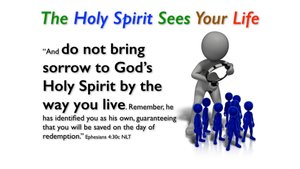
Lastly I want to mention a verse in Ephesians 4:30 that has great meaning for each of our lives because it involves the most sensitive and dearest Person Who truly cares for us: “Do not grieve the Holy Spirit of God, by Whom you were sealed for the day of redemption.” The Holy Spirit totally understands grief, because people grieve His precious heart every single day. Seeking to cultivate His company is the greatest privilege we have been given, why would we cause Him unnecessary pain? We are blessed when we mourn, we learn that we are limited beings who need Him. 👋

P 2577 Grief and death.

Yeah, I know, everyone’s least favourite subject. The only Person who is well-qualified to talk about life after death is the Lord … as well as people like Jairus’ daughter, and Lazarus! And the very worst point about dying and death, is we won’t know what it is like until we get there. Fortunately this concept is all over the bible and we can study it, so the Holy Spirit can help us.

The bible is not silent about death. It simply says: “we must not grieve like someone with no hope.” (1 Thessalonians 4:13) But our lack of experience with God’s goodness can often carry us into head knowledge, not grief and sorrow resolution. If that is you, then please don’t be condemned. Tell the Lord you need His help. Some kinds of grief are like liquid mud – if we fall in it is hard to get out! Everybody dies, however it seems most human beings don’t cope with the finality of death. Sometimes, someone dies and our unresolved grief gets muddled up with other terrible losses. Daily keeping short accounts with others makes a great deal of sense because it is inevitable that those left behind will need closure.

The hard part of losing someone important to you, isn’t simply just because of their absence – it is that the possibility of change dies with them. Your relationship with that other person suddenly becomes stuck in time.  And now we must somehow go on to build a new life without them, and move on from the pain, regrets, failures and losses of the past. This is why we need to repent as we go along, wherever necessary. And, at the same time, we also need remember to give our pain back to the Lord. Jesus bore it on the cross and He carried it. (More on that later.) Eventually, all of us do our best to move on. Yet every time we remember, sadness rushes in.

I think grief is a vastly misunderstood normal response and emotion. It manifests itself differently through different people. Some people get mad, some people are sad – some people get mad and sad, and some just walk on, furiously suppressing how they feel. I like what a psalmist said:“Weeping may endure for a night, but joy cometh in the morning.”Psalm 30:5. This tells me something about grief. It can seem like it will drag on forever, but it is meant to be a progressive moving thing not a parking station we can’t get out of. 

Also grief is not just about shedding a tear, it is about a dark place our hearts sometimes go into, when any hope for any kind of further future has gone. Now this world seems to be a place where true reconciliation is suddenly out of our reach. We start to regret things that we’ve said;  what we didn’t say – and the things we should have said. Like I said, repentance helps. In those days we need to remember Jesus is our hope, He is our anchor. Park your little boat (life) and throw out the anchor – He will hold you through the storm.  Meanwhile, I’m all for appreciating people while they are still breathing! 

Our society is quite intolerant of the effects of grief upon individuals. We do not seem to have the freedom to allow a mourner to pass through this kind of tough season. The BIBLE says in Ecclesiastes 3:1ff- (bits of it): “To every thing there is a season, and a time to every purpose under the heaven: A time to be born, and a time to die; … …A time to weep, and a time to laugh; a time to mourn, and a time to dance; …  …A time to get, and a time to lose; a time to keep, and a time to cast away;” I love this scripture. It explains there is definitely a time for all kinds of things to happen to us in this life — BUT IT DOESN’T SAY, HOW LONG that time should be. 🤔

Now let’s look at what Jesus Christ has already done for us in this area. Remember, the bible says these things are a living established fact! “Surely He hath borne our griefs, and carried our sorrows: yet we did esteem Him stricken, smitten of God, and afflicted.”  Isaiah 53:4. Jesus Himself said:‘Come unto Me all you who are labouring and are heavy laden.’ In exchange for griefs and sorrows, we can have HIS REST. That doesn’t mean we leave grief and sorrow behind us, it means He carries it FOR us.  It is an exchange. We will all suffer from some sort of grief, but it does not have to weigh us down, because Jesus has already carried it for us. I’m a literalist when it comes to the bible, I use it like a prescription. I believe that we can pray and exchange our grief and our sorrow for His REST.

Personally, I think as long as the bereaved person is moving forward in their grief, we should butt out and simply support them in ways that are meaningful to them. Grief suppressed can be dangerous – so let’s biblically learn to deal with the reality, and the pain, instead of using avoidance. Somebody – I can’t remember who said it – once said: “Grief is love with no place to go. I think that sums this situation up beautifully. Remember our griefs can be given to the Saviour, Who knows all about it and took it with Him to the cross.   🥲👋